Why the 70 Fruits Coloring Book Printable Is Reshaping Early Literacy Engagement—Strategically
In today’s fast-evolving educational landscape, professionals across curriculum design, ESL instruction, homeschool leadership, and edtech development are re-evaluating how foundational skills—especially vocabulary acquisition—are delivered. No longer confined to flashcards or rote repetition, modern literacy tools must satisfy three non-negotiable criteria: cognitive alignment, operational efficiency, and cross-contextual adaptability. The 70 Fruits Coloring Book Printable doesn’t just meet those standards—it demonstrates how intentional, low-tech resources can serve high-impact pedagogical and operational goals.
A Resource Designed for Real Workflows—Not Just Theory
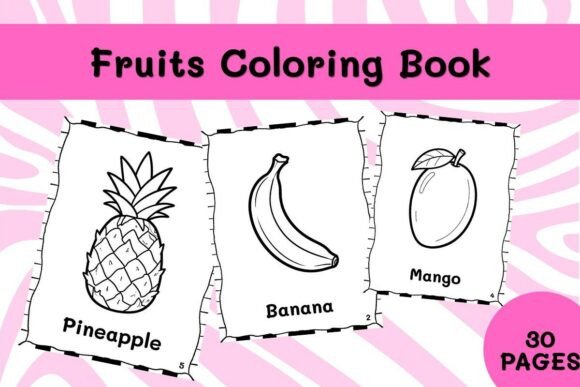
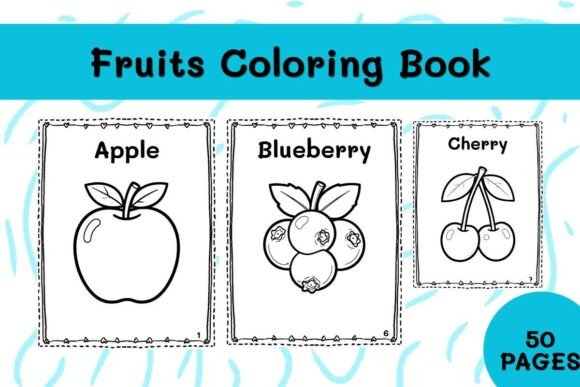
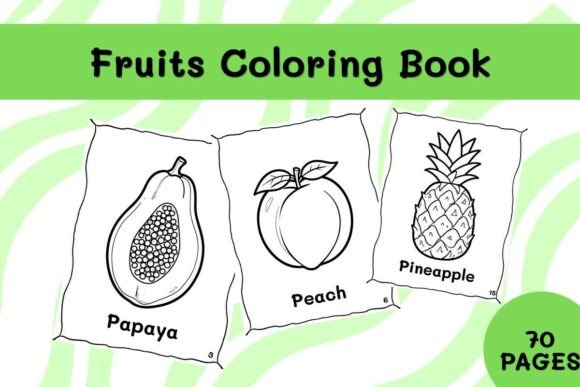
The 70 Fruits Coloring Book Printable is a purpose-built, no-prep PDF collection of 70 original fruit-themed coloring pages—each sized at 8.5 x 11 inches for universal printer compatibility. But its value lies not in quantity alone. Each page integrates visual representation, word labeling, and deliberate white space to support dual-coding theory: learners process linguistic and pictorial information simultaneously, reinforcing memory pathways more robustly than text-only exposure.
This isn’t a repackaged clipart bundle. Every illustration is custom-drawn with clarity, consistency, and developmental appropriateness—think ripe mangoes with visible texture, segmented citrus halves, and tropical fruits like rambutan rendered with anatomical accuracy yet stylistic accessibility. That level of intentionality reflects a broader shift in educational resource creation: away from generic stock assets and toward curated visual scaffolding—a trend increasingly prioritized by curriculum coordinators evaluating supplemental materials for Tier 1 literacy intervention.
Bridging Gaps in Today’s Learning Ecosystem
Consider the constraints facing today’s educators: shrinking planning time, growing class heterogeneity (including multilingual learners), and rising demand for evidence-informed practice. A single-page worksheet might take 12 minutes to prep, differentiate, and distribute. In contrast, the 70 Fruits Coloring Book Printable requires zero customization—just print, copy, and deploy. That “no prep” designation isn’t marketing fluff; it’s a direct response to workflow fatigue documented in recent teacher efficacy studies, where 68% of K–3 educators cited preparation burden as a top barrier to consistent vocabulary instruction.
For ESL specialists, the set functions as a tactile lexical anchor. Words like pineapple, kiwi, and papaya carry phonological complexity that benefits from multisensory reinforcement. Coloring provides motor engagement while students attend to spelling patterns (“kiwi ends in ‘i’, not ‘y’”), syllable segmentation (“straw-ber-ry”), and semantic categorization (“Which fruits grow on vines? Which grow on trees?”). These aren’t passive activities—they’re structured opportunities for implicit grammar and morphology exposure.
Aligning With Broader Consumer and Pedagogical Shifts
Consumers—whether classroom teachers, homeschool parents, or learning center directors—are moving decisively away from fragmented digital apps toward hybrid toolkits: digital platforms for assessment and analytics, paired with high-fidelity physical materials for skill-building and regulation. This mirrors findings from the 2024 EdTech Research Collective report, which noted a 41% YoY increase in purchases of printable resources among educators who also use LMS-integrated tools. Why? Because screen fatigue is real—and so is the neurocognitive benefit of fine-motor tasks during language processing.
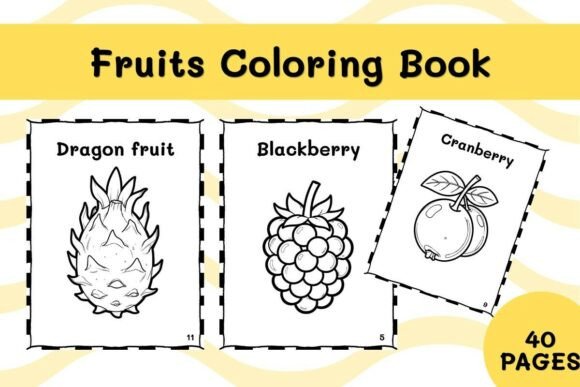
Simultaneously, the rise of “slow pedagogy”—a movement emphasizing depth over speed, reflection over coverage—has elevated resources that invite sustained attention rather than rapid-fire interaction. Coloring fruit illustrations invites focus, breath, and cognitive rest—conditions proven to improve retention in early vocabulary acquisition. When a child colors the ridges of a dragon fruit while saying “dragon fruit” aloud, they’re engaging working memory, articulatory control, and visual discrimination in one seamless loop.
Practical Integration Across Contexts
The versatility of the 70 Fruits Coloring Book Printable becomes apparent when mapped to actual use cases:
- Literacy Centers: Rotate pages weekly alongside matching games, sentence frames (“I like ___.”), and phoneme-sorting cards—using the same fruit image across modalities builds neural coherence.
- Homeschool Routines: Assign one fruit per day as part of a “Fruit of the Week” unit—pair coloring with a simple recipe (e.g., banana smoothie), a geography note (“Where do mangos grow?”), and a spelling challenge.
- ESL Onboarding: Use pages as conversation prompts: “What color is this fruit? Is it sweet or sour? Do you eat it fresh or cooked?”—transforming passive recognition into active production.
- Therapeutic Settings: Occupational therapists leverage the controlled line work and bilateral coordination required for coloring as part of sensory integration protocols—making vocabulary practice functionally embedded, not additive.
Technology Isn’t Replacing Print—It’s Elevating Its Purpose
Some assume digital dominance means print is obsolete. But the data tells a different story. According to the 2023 Global Learning Materials Survey, 79% of education purchasers now prioritize “print-ready digital files” over physical kits—valuing version control, instant access, and scalability without inventory risk. The 70 Fruits Coloring Book Printable exemplifies this convergence: it’s a digitally distributed asset with analog impact. Educators download once, store indefinitely, and scale usage across grade levels—no licensing fees, no device dependency, no update cycles.
Moreover, its PDF format enables strategic adaptation: a district literacy coach can extract 10 pages for a phonics-aligned mini-unit; a freelance curriculum designer can embed select images into a client’s custom workbook; a marketer building a “Back-to-School Literacy Bundle” can license derivative usage rights—all without compromising fidelity. That interoperability is increasingly central to how professionals evaluate resource ROI.
More Than a Coloring Book—A Strategic Literacy Lever
At surface level, the 70 Fruits Coloring Book Printable delivers what its title promises: 70 fruit-themed coloring pages. But beneath that simplicity lies a tightly engineered literacy intervention—one that respects cognitive load theory, honors diverse learning profiles, and aligns with operational realities. It meets learners where they are: visually oriented, kinesthetically engaged, and linguistically curious.
That’s why creators, entrepreneurs, and instructional designers are paying attention—not because coloring books are novel, but because this one solves multiple, intersecting challenges with elegant minimalism. In an era where attention is scarce and outcomes are scrutinized, tools that reduce friction while deepening impact don’t just survive—they become infrastructure.
If you’re building curricula, supporting multilingual learners, designing family engagement programs, or developing hybrid learning products, the 70 Fruits Coloring Book Printable offers more than convenience. It offers coherence: between research and practice, between strategy and execution, between what we know works and what we have time to implement.
As the field continues to prioritize human-centered design in education—where tools serve people, not the reverse—resources like this signal a maturing understanding of what “effective” truly means: not flashy, not complex, but precisely calibrated.