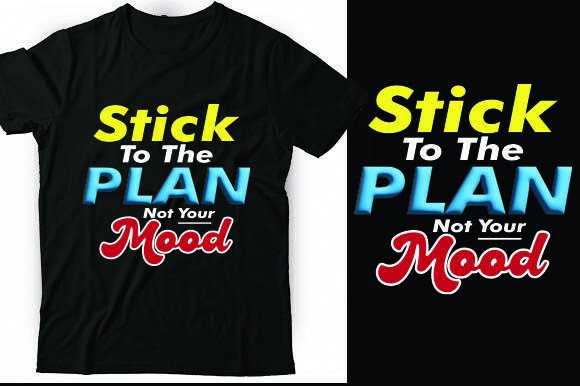
Stick to the Plan Not Your Mood
When motivation flickers—or vanishes entirely—it’s easy to pause, delay, or abandon what you set out to do. But consistency rarely waits for perfect feelings. Stick to the Plan Not Your Mood isn’t just a catchy phrase—it’s a grounded principle for people who value progress over perfection. It reminds us that discipline, structure, and intentionality often produce better outcomes than waiting for inspiration to strike.
Why This Mindset Shift Matters in Real Life
Consider a freelance graphic designer juggling three client deadlines. On Monday, energy is high—designs flow easily. By Wednesday, fatigue sets in, self-doubt creeps in, and the urge to “just check emails for 20 minutes” grows stronger. If action depends on mood, work stalls. But if the designer follows a pre-set schedule—blocking time for revisions, client feedback, and file exports regardless of how they feel—they protect momentum, meet deadlines, and preserve professional credibility.
This same logic applies across roles: an educator preparing lesson plans before school starts, a small business owner batching social media posts weekly, or a writer committing to 500 words daily—even when distracted or uninspired. Stick to the Plan Not Your Mood helps anchor effort in systems, not sentiment.
How the Design Reinforces the Message—Practically
The Stick to the Plan Not Your Mood design does more than look sharp on apparel—it serves as a visual cue that supports behavioral change. When printed on a t-shirt, tote bag, or laptop sticker, it becomes a quiet but consistent reminder during moments of hesitation. That subtle reinforcement can tip the scale between scrolling and starting, between postponing and doing.
Unlike generic motivational slogans, this phrase targets a specific cognitive hurdle: the mistaken belief that readiness must precede action. Its clarity makes it especially useful in environments where focus is fragmented—co-working spaces, home offices, classrooms, or creative studios.
Formats That Fit Real-World Use Cases
The design comes in four practical formats—each serving distinct needs:
- JPG: Ideal for quick mockups, social media posts, or digital presentations—no editing required, just plug-and-play clarity at 300 dpi.
- Editable AI file: Essential for designers who need to adjust colors, typography, or layout for brand alignment—say, adapting the quote for a wellness studio’s merch line or a tech startup’s internal swag.
- SVG: Perfect for web use, scalable icons, or cutting machines—great for makers creating vinyl decals, custom stickers, or laser-cut signs without pixelation.
- Transparent PNG (4500×5400, 300 dpi): Optimized for print-on-demand platforms and high-resolution physical products like premium tees, mugs, or canvas bags—crisp edges, no background interference.
All files arrive in one ZIP folder—no complex extraction needed. Double-click to open, drag into your workflow, and go. That simplicity matters when time is scarce and friction kills follow-through.
Who Benefits Most—and Why
Entrepreneurs launching side projects often begin with enthusiasm—but burnout or uncertainty can derail them mid-way. A tangible, repeatable mantra like Stick to the Plan Not Your Mood gives them permission to act imperfectly while staying aligned with long-term goals.
Creatives—illustrators, writers, podcasters—also gain from its dual function: as both personal anchor and shareable content. Posting the design on Instagram or including it in a newsletter doesn’t just promote a product; it models mindset discipline to an audience that values authenticity over polish.
Educators and coaches use it in workshops on habit formation or goal-setting. Printed on handouts or projected during sessions, it sparks reflection: *What plan have I abandoned because I didn’t “feel like it”? What would happen if I tried one week of showing up anyway?*
Where It Fits—and Where to Pause
This design excels when used intentionally—not as decoration, but as part of a larger system. It pairs well with habit trackers, time-blocking calendars, or accountability groups. However, it’s not a substitute for realistic planning. If your “plan” demands 3 hours of deep work after a sleepless night, no amount of motivational typography will override biology. The phrase works best when paired with humane, adaptable structures—not rigid dogma.
Also worth noting: while the message resonates broadly, tone matters. Some audiences respond better to warmth (“You’ve got this”) than directness (“Stick to the Plan”). If your brand voice leans empathetic or nurturing, consider pairing this design with complementary visuals—soft colors, rounded fonts, or secondary text that acknowledges effort over outcome.
Designing With Purpose—Beyond the T-Shirt
Because the file package includes editable vector formats, users aren’t limited to apparel. A marketing manager might resize the SVG for an email header reinforcing Q3 campaign discipline. A therapist could print the transparent PNG on postcards for clients working on executive function skills. A university career center might embed the JPG in a workshop slide about managing academic workload during finals week.
The flexibility supports reuse across contexts—reducing design overhead while keeping messaging cohesive. That’s efficiency with intention: less time sourcing assets, more time applying the principle.
A Small Anchor in a Distracted World
In a culture that glorifies hustle *and* burnout—often in the same breath—Stick to the Plan Not Your Mood offers something quieter but more sustainable: agency rooted in choice, not feeling. It doesn’t deny emotion. It simply refuses to let emotion dictate direction.
That distinction matters most when stakes are low—like skipping a workout—or high—like missing a client deadline that affects team capacity. Each time you choose the plan over the mood, you strengthen a mental muscle: the ability to align behavior with values, even when it’s inconvenient.
So whether you’re printing it on a shirt for your next networking event, using the AI file to customize a team challenge banner, or saving the PNG as your desktop wallpaper—remember: the power isn’t in the pixels. It’s in the pause before the click, the breath before the start, the decision to begin—even when you don’t feel ready.