40 Fruits Coloring Book Printable
Learning vocabulary doesn’t have to mean flashcards, drills, or screen time. The 40 Fruits Coloring Book Printable bridges creativity and cognition—giving learners a tactile, joyful way to absorb and retain fruit-related words while building foundational literacy skills. Designed for real-world use—not just theory—it’s a quietly powerful tool that works across age groups, learning styles, and environments.
More Than Just Coloring Pages
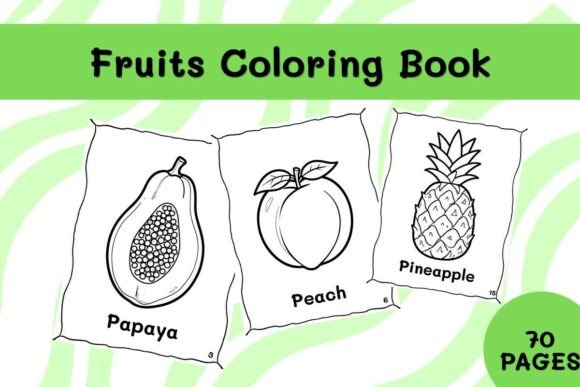
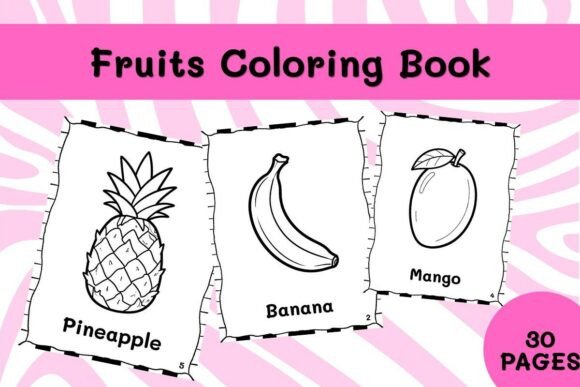
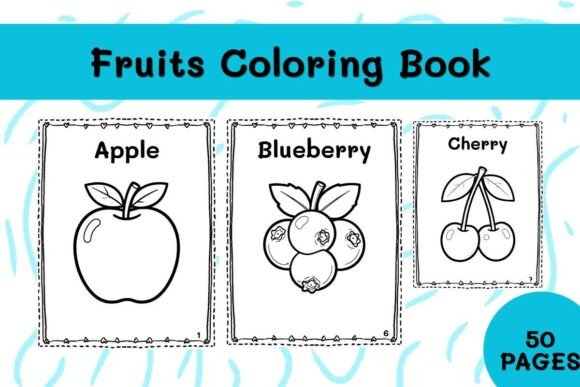
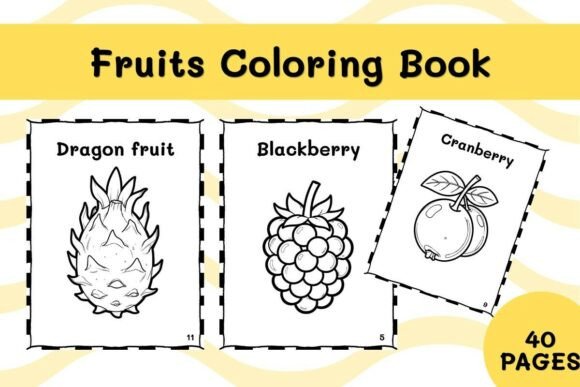
This isn’t a collection of generic fruit outlines. Each of the 40 pages features a clearly labeled, high-contrast illustration of a single fruit—think dragonfruit, guava, starfruit, and persimmon alongside familiar staples like banana, apple, and mango. The labels use consistent, readable fonts sized for early readers and ESL students alike. Every page is optimized for clarity: no visual clutter, no ambiguous silhouettes, and no guesswork about spelling or pronunciation.
What makes it stand out is its intentional design logic. Words appear in sentence context on select pages (“I eat a juicy watermelon.”), reinforcing syntax and usage. Some illustrations include subtle contextual cues—a bowl, a tree, or a hand holding the fruit—to support inferencing and comprehension. That attention to pedagogical detail transforms passive coloring into active language processing.
Where It Fits—and Why It Sticks
Educators often face two competing demands: covering standards *and* meeting students where they are. The 40 Fruits Coloring Book Printable answers both. In a kindergarten literacy center, it supports phonemic awareness (e.g., “strawberry starts with /str/”) and letter-sound mapping. In an adult ESL class, it builds topic-specific vocabulary with visual anchoring—critical when learners lack shared cultural references for less common fruits.
For homeschoolers, it eliminates lesson-planning friction. No laminating, no cutting, no prep—just print and go. For therapists working on fine motor development or attention regulation, the clean line work and moderate complexity offer ideal scaffolding. Even content creators repurpose these pages: bloggers embed them in fruit-themed newsletters; podcasters use them as printable companion resources; small publishers license the artwork for bilingual children’s books.
Real Use Cases Across Contexts
- Classroom differentiation: A third-grade teacher uses pages 1–10 for emerging spellers (single-syllable fruits) and pages 35–40 for advanced learners (multi-syllable, less common terms). Students annotate definitions or draw synonyms in margins—turning static pages into interactive glossaries.
- Digital integration: A freelance curriculum designer imports the PDF into Canva, adds editable text boxes, and converts it into a self-grading Google Slides activity—keeping the original artwork intact while adding interactivity.
- Brand-aligned resource kits: A health-coaching business bundles select pages with smoothie recipes and nutrition tips, turning vocabulary practice into client engagement material that reflects their wellness-focused identity.
- Therapy & neurodiversity support: An occupational therapist uses the predictable layout and clear visual boundaries to reduce cognitive load during sensory-regulating activities—coloring becomes both calming and cognitively generative.
Practical Considerations Before You Print
The file is delivered as a standard 8.5 x 11-inch PDF—optimized for home printers but also scalable for large-format printing if needed. It’s not editable in its base form, which preserves consistency across users but means customization requires basic design tools (like Adobe Acrobat or free alternatives such as PDFescape). If you plan to adapt it for multilingual use, keep in mind that font licensing permits personal and classroom use—but not commercial redistribution of modified versions without permission.
Also worth noting: the color palette in the line art intentionally avoids over-detailing. This isn’t a mandala—it’s designed for accessibility. Children with visual processing sensitivities or motor challenges can successfully color within lines without frustration. Likewise, the spacing around each word allows room for tracing, copying, or even sticker-based spelling reinforcement.
Why “No Prep” Matters More Than You Think
In education and creative entrepreneurship, time is the most non-renewable resource. The phrase “no prep” isn’t marketing fluff here—it reflects deliberate constraints baked into the design. No cutting. No sorting. No laminating. No digital setup. That simplicity reduces implementation barriers so significantly that it changes behavior: teachers actually *use* it instead of letting it gather dust in a folder. Parents pull it out during rainy-day afternoons. Freelancers attach it to client onboarding emails as a value-add.
That ease compounds over time. One educator reported using the same set across three school years—first with kindergarteners identifying fruits, then with second graders practicing cursive spelling, then with fourth graders comparing botanical vs. culinary definitions. The 40 Fruits Coloring Book Printable grows with the learner because its foundation is flexible, not prescriptive.
A Quietly Strategic Resource
This isn’t flashy—but it’s deeply functional. It respects the user’s time, honors cognitive load theory, and meets learners at multiple readiness levels without requiring separate lesson plans. Whether you’re designing a summer literacy program, building a subscriber resource library, supporting English acquisition, or creating inclusive classroom materials, its quiet consistency delivers measurable returns: stronger word recognition, increased engagement, and more confident spelling—all anchored in something as simple and universal as a strawberry.
If you’ve used the 40 Fruits Coloring Book Printable in an unexpected way—or adapted it for a niche audience—we’d love to hear how. Real-world feedback like yours helps refine future iterations and keeps resources grounded in actual classroom, home, and studio needs.