50 Insects Coloring Book Printable: A Fun, No-Prep Way to Build Vocabulary & Literacy Skills
Why Coloring Isn’t Just for Play—It’s Powerful Learning
For generations, coloring has been seen as a simple pastime—a quiet activity for rainy days or classroom downtime. But modern educational research tells a different story. When children (and even older learners) color purposefully—especially alongside targeted vocabulary—something remarkable happens: neural pathways strengthen, attention deepens, and retention improves. The 50 Insects Coloring Book Printable transforms this everyday activity into a dynamic literacy tool. Designed with intention—not just aesthetics—it merges visual learning, fine motor development, spelling practice, and science vocabulary in one ready-to-use resource.What’s Inside the Insects Coloring Book – Learn Vocabulary Set?
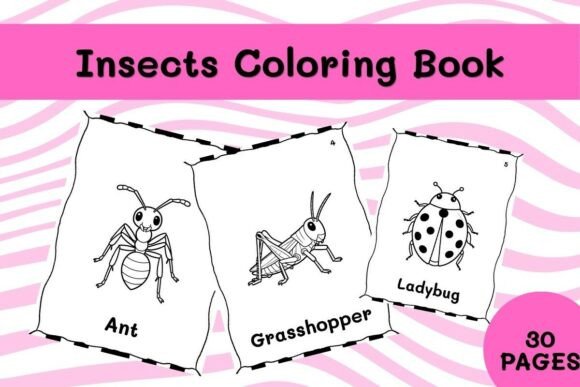
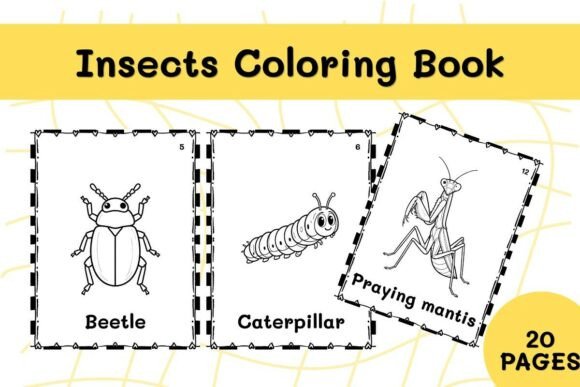
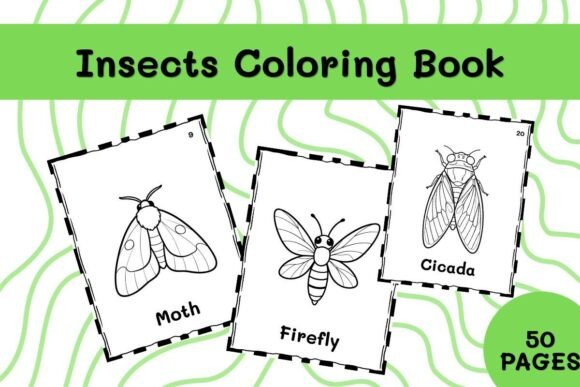
- 50 unique coloring pages, each featuring a clearly illustrated insect paired with its name in bold, easy-to-read font;
- A professionally formatted PDF file optimized for standard US letter size (8.5 x 11 inches);
- Pages designed for clarity and accessibility—ideal for young learners, ESL students, and emerging readers;
- Coverage of foundational entomology vocabulary including ant, bee, butterfly, dragonfly, grasshopper, ladybug, mantis, mosquito, roach, spider (note: while spiders aren’t insects, they’re commonly included in early science units for comparative learning), and many more;
- No clipart or generic graphics—each illustration is hand-crafted to support word-picture association and anatomical awareness.
Vocabulary Acquisition Through Multisensory Engagement
Coloring activates both hemispheres of the brain. As students select colors, stay within lines, and say or spell the insect name aloud, they reinforce memory through visual, kinesthetic, and auditory channels simultaneously. This triple encoding makes words like centipede or firefly far more memorable than flashcards alone.Spelling & Word Recognition Practice
Each page displays the full word beneath the image—no abbreviations, no phonetic hints. Learners see correct capitalization, syllable structure, and common spelling patterns (e.g., “-fly” in dragonfly, firefly, butterfly). Repeated exposure builds orthographic mapping—the brain’s ability to instantly recognize whole words by sight.Who Benefits Most—and Where Can It Be Used?
- Classroom teachers use it in literacy centers, morning warm-ups, or as a calming transition activity after recess;
- ESL and ELL educators rely on it to build academic vocabulary with low-language barriers—students can point, name, match, and color before mastering full sentences;
- Homeschool families appreciate its flexibility: pair it with backyard bug hunts, library books like The Very Hungry Caterpillar, or simple science experiments (e.g., observing ant trails);
- Speech-language pathologists incorporate pages into articulation practice—targeting /b/, /f/, /l/, and /r/ sounds found in words like bumblebee, firefly, and ladybug;
- Occupational therapists use the fine motor demands of coloring to support pencil control, hand strength, and visual-motor coordination.
Dispelling Common Misconceptions About Educational Coloring
Some educators wonder: Is coloring really “academic enough”? Does it waste valuable instructional time? Let’s clarify:Myth: Coloring is passive and unstructured.
Truth: When guided by intentional design—as in this insect vocabulary set—it becomes an active cognitive task involving decision-making (color choice), spatial reasoning (staying in boundaries), and language processing (reading, sounding out, recalling).
Myth: Printables are just digital worksheets in disguise.
Truth: This collection avoids busywork. Each page isolates one concept, minimizes visual clutter, and prioritizes readability and developmental appropriateness—key markers of high-quality educational design.
Myth: Insect vocabulary is too niche or advanced for early learners.
Truth: Children encounter insects daily. Naming them correctly builds confidence, supports classification skills (“What makes a beetle different from a moth?”), and fosters scientific habits of mind—observation, comparison, curiosity.
Practical Tips for Getting the Most From Your Printable Set
- Turn coloring into conversation: Ask open-ended questions like, “What do you think this insect eats?” or “Where might we find a praying mantis?”
- Add movement: After coloring a grasshopper, jump like one. After a bee, hum and wiggle antennae. Kinesthetic links deepen memory.
- Create a class insect dictionary: Staple completed pages into a booklet. Add handwritten definitions or draw habitat scenes on the back.
- Use as assessment tools: Observe whether students self-correct spelling, recognize previously colored insects in new contexts, or begin using target words in speech.
- Pair with free digital resources: Supplement with trusted sites like National Geographic Kids’ insect videos or the Smithsonian’s “Bug Info” database for deeper exploration.