30 Fruits Coloring Book Printable
Learning vocabulary doesn’t have to mean flashcards, drills, or screen time. The 30 Fruits Coloring Book Printable bridges creativity and cognition—giving learners a tactile, low-pressure way to absorb, retain, and recall fruit-related terms while building fine motor control, spelling awareness, and visual-word association.
This isn’t just another coloring sheet collection. It’s a thoughtfully structured, classroom-tested resource designed for real-world use—whether you’re guiding a bilingual kindergartener through their first English fruit words, supporting ESL teens with academic vocabulary, or helping neurodiverse students anchor new terms through multisensory input.
What Makes This Set Stand Out?
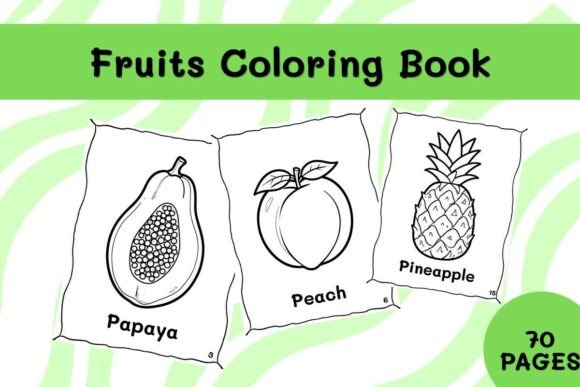
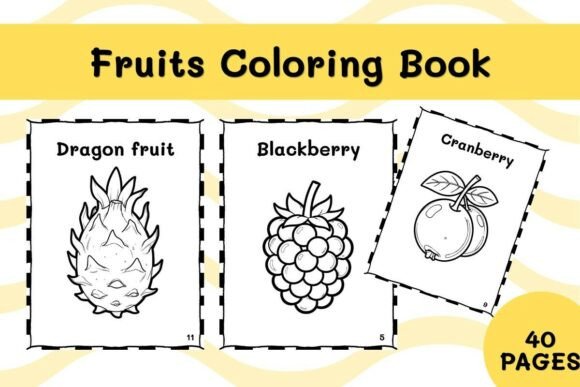
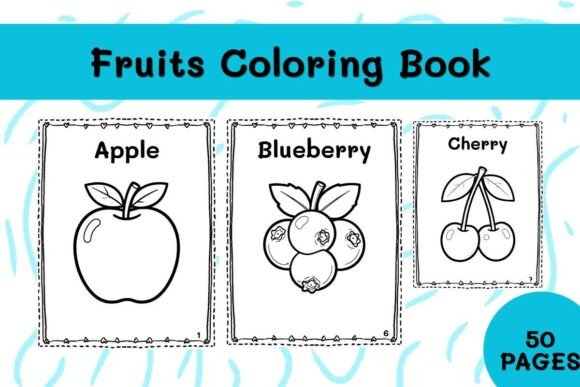
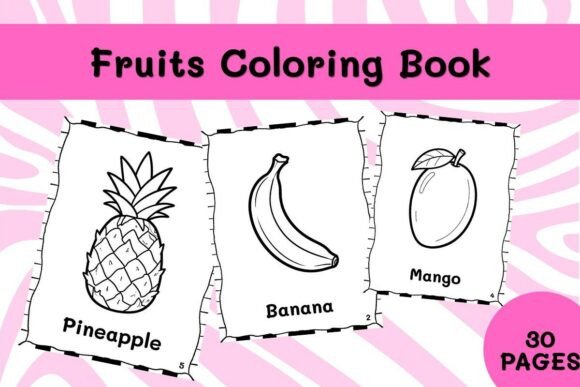
At its core, the 30 Fruits Coloring Book Printable delivers consistency without repetition. Each of the 30 pages features one fruit—apple, dragon fruit, guava, starfruit, persimmon, and more—with clear, bold line art sized to standard 8.5 × 11” paper. No grayscale shading, no cluttered backgrounds: just clean outlines paired with the word spelled correctly in uppercase and lowercase letters, plus phonetic hints where helpful (e.g., “kiwi /KEE-wee/”).
The design prioritizes cognitive load management. Visuals are realistic enough to support identification but simplified enough to avoid overwhelming young or emerging readers. Words appear in consistent placement—always beneath the image—so learners begin to anticipate layout patterns, reinforcing reading directionality and word-picture matching.
It’s also intentionally flexible. You won’t find rigid instructions or forced activities. That’s by design. Educators, therapists, and parents can adapt each page based on need: trace letters, circle initial sounds, label parts (“stem,” “skin,” “seed”), compare textures (“smooth banana vs. fuzzy kiwi”), or even pair with real fruit tasting sessions.
Where This Resource Fits Across Real Contexts
In classrooms: Use it as a literacy center rotation—students color while practicing sight words, blending sounds, or sorting fruits by color, season, or origin. Pair with a world map to discuss where mangoes grow versus pomegranates. It’s especially effective during morning warm-ups or transition times when energy is high but focus is still settling.
For ESL and ELL instruction: Fruit vocabulary appears early in most language curricula—and for good reason. It’s concrete, culturally universal, and rich in phonics variation (/j/ in “jujube,” /ʃ/ in “cherimoya,” silent letters in “raspberry”). The 30 Fruits Coloring Book Printable gives learners repeated exposure without monotony, supporting both receptive and productive vocabulary development.
In homeschool settings: Its no-prep nature means less planning fatigue and more responsive teaching. Print one page per week, add a short discussion (“Why do bananas curve?” “How is a coconut different from other fruits?”), and keep a growing “Fruit Word Wall” with colored pages as reference. Over time, students self-correct spelling, notice plural forms (“cherries,” “grapes”), and internalize syllable breaks.
For therapists and special educators: Occupational therapists use these pages for pencil grip practice and bilateral coordination (coloring with one hand while stabilizing paper with the other). Speech-language pathologists incorporate them into articulation drills or semantic mapping—grouping fruits by taste, growth habit (tree, vine, bush), or nutritional category (vitamin C–rich, fiber-dense).
For creators and digital product developers: These pages serve as versatile base assets. Add your own branding, layer interactive PDF elements (click-to-hear pronunciation), or integrate into a larger themed unit (e.g., “Healthy Eating Bundle” or “Phonics & Produce”). Because it’s delivered as a ready-to-print PDF, you can easily repurpose individual illustrations in slide decks, social media carousels, or printable flashcard sets—no design overhead.
Practical Considerations Before You Use It
While the 30 Fruits Coloring Book Printable is plug-and-play, getting the most out of it depends on intention—not just printing. Here’s what works well in practice:
- Don’t assume coloring = passive learning. Prompt questions: “Which fruit starts with /p/?”, “Find one that grows on a vine.” Even brief verbal interaction boosts retention.
- Use realia when possible. Hold up an actual orange while coloring the orange page. Compare texture, weight, smell. That multisensory link makes the word stick far better than any worksheet alone.
- Rotate tools strategically. Colored pencils reinforce fine motor control; markers build confidence in coverage; crayons help younger kids stay inside lines. Switching tools keeps engagement high and builds varied skills.
- Respect pacing. Some learners may complete three pages in one sitting. Others may spend 20 minutes on one—naming parts, inventing stories, or drawing stems and leaves. That’s not off-task; it’s deep processing.
Also worth noting: The set avoids overused fruits only (no 10-page banana series) and includes globally relevant options like rambutan, tamarind, and feijoa—expanding cultural awareness alongside vocabulary. That diversity matters, especially in inclusive or international classrooms.
Why “No Prep” Is More Than a Convenience
“No prep” sounds like a time-saver—and it is—but its real value lies in lowering barriers to implementation. When educators or caregivers aren’t spending hours cutting, laminating, or sourcing materials, they’re investing that time in observation, differentiation, and relationship-building. That shift—from logistical labor to responsive teaching—is where meaningful learning happens.
And because each page is standardized in size and format, it integrates cleanly into existing systems: bind into a student’s personal vocabulary journal, staple into a take-home packet, or insert into a dry-erase sleeve for repeated use with wipe-off markers.
If you work with learners who benefit from routine, visual support, or kinesthetic input—or if you simply want vocabulary practice that feels joyful instead of transactional—the 30 Fruits Coloring Book Printable delivers quietly, consistently, and effectively. It won’t replace conversation or hands-on exploration—but it strengthens both, giving learners a visual anchor they can return to again and again.
When you see a child point to their colored “papaya” page and say, “This one has black seeds and orange flesh”—that’s the moment the resource has done its job. Not by drilling, but by inviting attention, curiosity, and calm focus. That’s the kind of learning that lasts.