30 Insects Coloring Book Printable
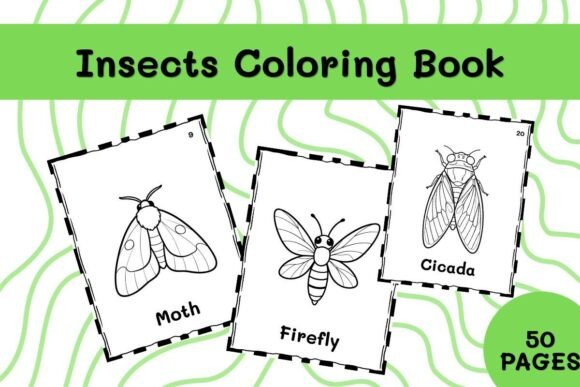
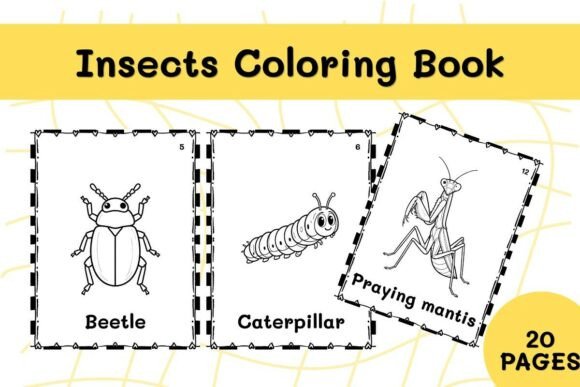
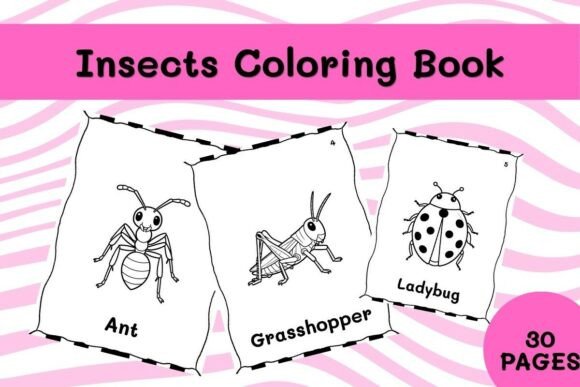
The 30 Insects Coloring Book Printable is a downloadable PDF resource containing 30 black-and-white line-art pages, each featuring a different insect—such as a ladybug, dragonfly, grasshopper, firefly, or praying mantis—paired with its written name. Designed for immediate use, it requires no preparation: users simply print the 8.5 x 11-inch pages and provide coloring tools. The set supports vocabulary development by linking visual representation with orthographic form, making it suitable for early readers, English language learners, and students practicing word recognition and spelling.
People often seek resources like the 30 Insects Coloring Book Printable when looking for low-barrier, screen-free learning tools. Educators may need supplemental materials for literacy centers or small-group instruction; homeschooling caregivers might want structured yet flexible activities that accommodate varied attention spans; and ESL instructors could be searching for tactile ways to reinforce high-frequency academic vocabulary in science and language domains. Interest also arises from a desire to integrate cross-curricular practice—combining life science content (insect anatomy, habitats, classification) with foundational literacy skills.
One benefit of this printable is its simplicity and consistency. Each page follows the same format: a clear, age-appropriate illustration centered on the page, with the insect’s name printed in standard font below. This repetition supports pattern recognition and reduces cognitive load, especially for emerging readers. Because the file is static and PDF-based, it works across devices and operating systems without requiring logins, subscriptions, or internet access during use. It also avoids digital distractions—no ads, notifications, or interactive elements that may divert focus from the core task of naming, sounding out, and coloring.
However, there are tradeoffs to consider. The 30 Insects Coloring Book Printable does not include definitions, phonetic guides, usage examples, or contextual sentences. It assumes some prior exposure to the target words or relies on external instruction to clarify meaning. For learners needing scaffolding—such as those with dyslexia, limited English proficiency, or significant decoding challenges—the absence of audio support, multisensory cues, or differentiated text (e.g., tracing lines, word families, or cloze exercises) may limit independent use. Additionally, while the illustrations are accurate enough for identification, they are stylized rather than photographic, which may affect scientific precision in advanced biology contexts.
Users should expect a focused, single-skill tool—not a comprehensive curriculum unit. It is most effective when used intentionally: as part of a broader lesson on insects, as a warm-up before reading nonfiction texts, or as reinforcement after direct vocabulary instruction. Success depends on how the resource is embedded into practice—for example, pairing coloring time with oral rehearsal (“Say ‘butterfly’ slowly. What sound does it start with?”), using the pages for spelling practice, or sorting completed sheets into categories (e.g., “insects with wings” vs. “insects with six legs”). Without such integration, the activity risks becoming passive coloring rather than active vocabulary learning.
This resource is a strong fit for settings where consistency, accessibility, and minimal setup are priorities. Classrooms with limited printing budgets or shared devices benefit from its one-time download and reuse across years. Homeschooling families appreciate the portability and adaptability—pages can be used for quiet time, travel, or mixed-age sibling activities. Literacy centers gain a predictable, self-directed station that allows teachers to rotate small groups without constant supervision. It also aligns well with Montessori-aligned or play-based approaches that value hands-on engagement with concrete concepts.
Alternatives may be more appropriate in other situations. For learners who need explicit phonics instruction, a resource with decodable text, syllable breakdowns, or rhyming extensions would offer deeper linguistic support. Teachers aiming to build conceptual understanding—such as life cycles, metamorphosis, or ecological roles—may prefer inquiry-based printables that include labeling diagrams, sequencing cut-outs, or compare-and-contrast charts. Digital options (e.g., interactive drag-and-drop labeling or narrated flashcards) suit environments with reliable tech access and goals around auditory processing or adaptive pacing. And for older students or those beyond beginner vocabulary levels, illustrated glossaries with definitions, synonyms, or usage in context would better meet developmental needs.
When deciding whether the 30 Insects Coloring Book Printable fits your goals, reflect on three practical questions: First, what is the primary objective? If reinforcing word recognition and spelling through repetition and fine motor engagement is central, this resource matches well. Second, what support structures are already in place? If you plan to introduce words orally, model pronunciation, or connect them to real-world observations (e.g., catching and releasing a beetle, then coloring its likeness), the printable becomes more effective. Third, what constraints shape your choices? Time, budget, tech access, and student independence levels all influence whether a no-prep, static PDF meets your operational reality.
It is also worth noting that vocabulary acquisition is cumulative and context-dependent. A single coloring page won’t “teach” the word “centipede” in isolation—but repeated exposure across modalities (hearing it, saying it, writing it, seeing it illustrated, connecting it to movement or habitat) strengthens neural pathways. The 30 Insects Coloring Book Printable contributes one piece of that ecosystem. Its value lies not in comprehensiveness, but in reliability: it delivers exactly what it promises—30 clean, ready-to-print insect vocabulary pages—without hidden requirements or assumptions about user expertise.
For educators and caregivers evaluating resources, clarity of purpose matters more than feature count. If your aim is to add a calm, tactile, and visually grounded layer to vocabulary instruction—especially around a high-interest topic like insects—this printable offers straightforward utility. It does not replace direct teaching, but it can extend it meaningfully when used with intention.