20 Insects Coloring Book Printable
If you’ve ever watched a child pause mid-coloring to ask, “What’s that bug called?”—or seen an ESL student light up when a word clicks because it’s paired with a vivid, familiar image—you already understand the quiet power of visual vocabulary building. The 20 Insects Coloring Book Printable isn’t just another set of line drawings. It’s a flexible, classroom-ready tool designed to meet learners where they are—whether that’s a kindergarten circle time, a bilingual homeschool morning, or a quiet corner in a speech-language therapy session.
More Than Just Coloring: A Vocabulary Anchor for Real Learning
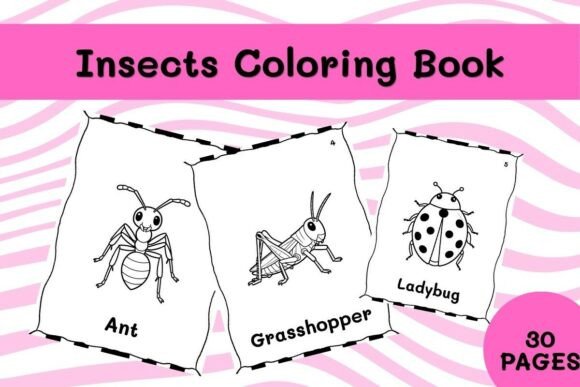
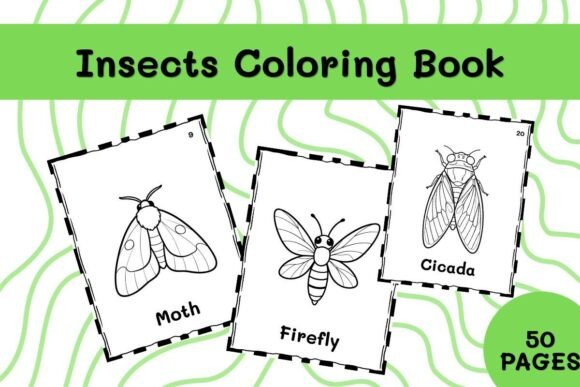
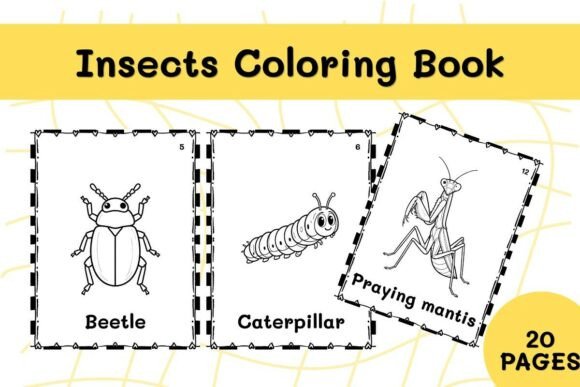
This printable pack delivers 20 high-clarity, age-appropriate insect illustrations—think ladybug, dragonfly, praying mantis, firefly, grasshopper, and more—each paired with its name in clear, readable font. No clipart clutter. No confusing scientific jargon. Just clean, consistent design optimized for early readers and emerging English speakers. Because the goal isn’t just coloring—it’s word association, spelling reinforcement, and confident word recall.
For example, a first grader tracing the outline of a butterfly while sounding out “b-u-t-t-e-r-f-l-y” builds muscle memory for both letter order and pronunciation. Meanwhile, a teen in an adult ESL class might use the same page to label parts (“antennae,” “wings,” “abdomen”) or compare life cycles across languages—no translation app needed, just visual scaffolding and shared context.
Where This Resource Fits—Without Replacing Your Curriculum
You don’t need to overhaul your lesson plans to make this work. Think of the 20 Insects Coloring Book Printable as a low-lift, high-impact companion—not a standalone curriculum.
- In public or private elementary classrooms: Use it during literacy centers as a “quiet focus activity” while small groups rotate. Teachers report it’s especially helpful for students who struggle with traditional worksheets—coloring provides motor engagement that supports attention and retention.
- In homeschool settings: Tuck a few pages into a nature journal. Pair them with a backyard bug hunt: find a real ant → color the ant page → write one sentence (“Ants live in colonies”). Suddenly, vocabulary becomes anchored in lived experience—not just memorization.
- In ESL and ELL programs: Insect names are concrete, culturally neutral nouns—ideal for building foundational vocabulary. Many educators use these pages for “listen and point” drills, matching games, or even simple cloze sentences (“This insect has ___ wings”). Bonus: insects appear across global ecosystems, so learners from varied backgrounds recognize the concepts—even if the English word is new.
- In special education and OT/SLP support: Fine motor practice meets language goals. Students can practice pencil control while labeling, sorting by features (e.g., “Which ones have six legs?”), or sequencing stages of metamorphosis. The consistent 8.5 x 11 size fits standard binders and laminators—making it easy to adapt for repeated use.
Practical Considerations Before You Print
Because it’s delivered as a ready-to-print PDF, the 20 Insects Coloring Book Printable works best when aligned with your actual setup—not just your ideal one.
Printing matters. These pages are sized for standard US letter paper (8.5 x 11 inches), but if you’re outside North America—or using older printers—check your default margins and scaling settings. A quick test print of page one avoids wasted ink and paper. Also, consider paper weight: 24–28 lb copy paper holds up well for crayons and colored pencils; if kids will use markers, go for heavier stock or print double-sided only if your printer handles bleed-through.
It’s intentionally no-prep—but that doesn’t mean zero planning. While there’s no cutting, laminating, or assembling required, think ahead about how you’ll extend the learning. Will students add labels? Write sentences? Compare two insects using “same/different”? A sticky note on the front page with your goal—“Today we’ll practice ‘compound words’ (e.g., firefly, dragonfly)” —turns passive coloring into active thinking.
Vocabulary scope is focused—not exhaustive. This set covers common, recognizable insects—not obscure species or taxonomic subgroups. That’s intentional. It prioritizes high-frequency, high-transfer words over encyclopedic coverage. If you need honeybee anatomy or monarch migration maps, this isn’t the resource. But if you want reliable, repeatable practice with core terms that appear in early science units, leveled readers, and standardized assessments? Yes—it delivers.
Who Benefits Most—and How Their Needs Shape the Use
The beauty of this printable lies in how differently it serves distinct users—without needing customization.
A busy teacher in a Title I school might use it for sub plans: clear instructions, minimal materials (just crayons), and built-in differentiation (some students color + trace; others color + write definitions). A homeschool parent juggling multiple ages might assign the same page to a 6-year-old (color and say the name) and a 9-year-old (research one fact and add it to the margin). A speech therapist could target /r/, /l/, or /th/ sounds by selecting insects whose names emphasize those phonemes—and then build articulation practice right into the coloring routine.
Even adults benefit indirectly. Parents report less resistance to “learning time” when it looks like play—and more meaningful conversations at dinner (“Did you know grasshoppers jump 20 times their body length?”). For neurodivergent learners, the predictability of the format—same layout, same font, same level of detail—reduces cognitive load, freeing mental energy for language processing instead of decoding instructions.
Strengths That Stand Out in Real Use
• Consistency without monotony: Each page follows the same clean template—name at the top, large central image, subtle border—so students quickly grasp expectations, yet the variety of insects keeps interest alive.
• Zero digital friction: No logins, no downloads beyond the single PDF, no device dependency. Print once, store in a folder, grab as needed—even during power outages or tech glitches.
• Scalable effort: Takes 30 seconds to hand out and 30 minutes to yield vocabulary gains. That ratio matters when your day is packed with transitions, assessments, and interruptions.
• Quietly inclusive: Insects aren’t tied to holidays, gendered themes, or regional customs—making this set genuinely accessible across diverse classrooms and homes.
A Note on What It Doesn’t Do (So You Can Set Accurate Expectations)
This isn’t a digital interactive workbook. There are no audio pronunciations, animated life cycles, or auto-graded quizzes. It won’t replace hands-on science kits or field guides. And while the illustrations are accurate enough for early learning, they’re not photorealistic—so it’s best paired with real specimens, videos, or picture books for deeper inquiry.
But that’s okay. Its value isn’t in doing everything—it’s in doing one thing exceptionally well: giving learners a joyful, tactile, repeatable way to connect words to meaning. When vocabulary sticks, it often starts with something as simple as holding a crayon and saying, “This is a cicada.”