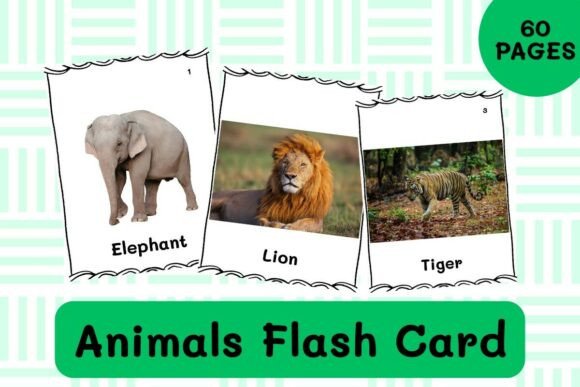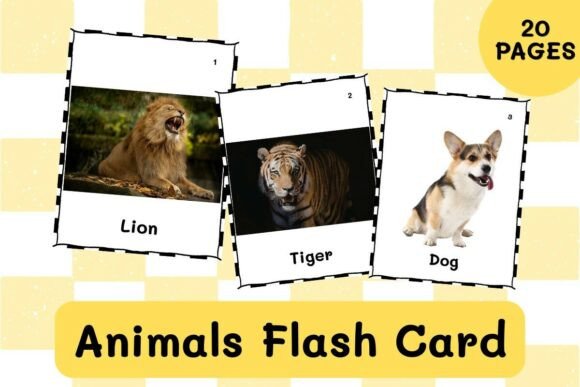
20 Animals Flash Card Printable No Prep: Learning Made Simple and Joyful
Teaching young children animal names, sounds, and characteristics doesn’t have to mean hours of prep work, laminating, or hunting for high-quality visuals. The 20 Animals Flash Card Printable No Prep set bridges the gap between educational rigor and everyday practicality—giving educators and caregivers a ready-to-use tool that sparks curiosity, builds vocabulary, and supports foundational literacy skills—all without requiring scissors, glue, or lesson-planning marathons.
Why Real Photos Matter in Early Learning
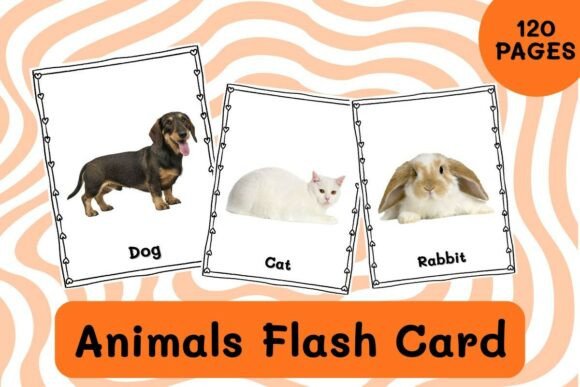
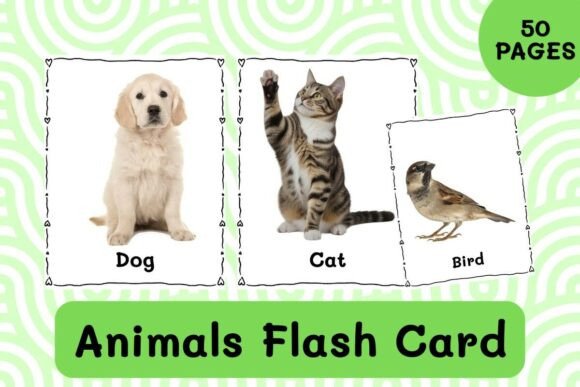
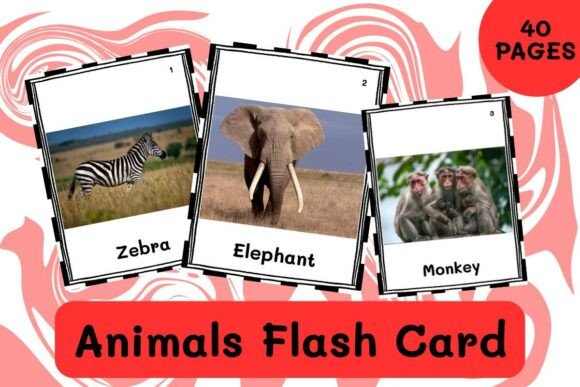
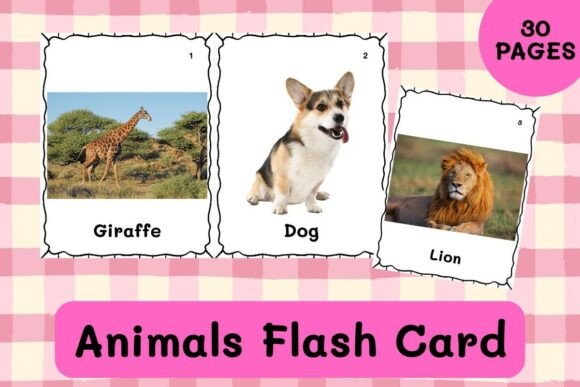
Unlike cartoon-style illustrations, the 20 Animals Flash Card Real Photos version offers authentic, high-resolution images of animals in natural or clearly recognizable contexts. A child sees the texture of an elephant’s wrinkled skin, the distinct shape of a flamingo’s beak, or the expressive eyes of an owl—not stylized approximations. This realism strengthens visual discrimination, supports accurate categorization, and lays groundwork for scientific thinking. Research consistently shows that young learners retain information more effectively when paired with real-world visuals—especially when those images are clear, uncluttered, and emotionally engaging.
These flash cards don’t just show animals—they invite questions. “Why is the sloth hanging upside down?” “What do those stripes on the zebra do?” “How does the octopus change color?” That spark of wonder is where real learning begins—and it starts with a single, well-chosen photo.
No-Prep Simplicity Meets Big Learning Outcomes
The phrase “no prep” isn’t just marketing—it’s a promise. Download the PDF, open it, and print. That’s it. Each card is sized to US Letter (8.5 x 11 inches), optimized for clarity and handling by small hands. There’s no need to resize, crop, or rearrange. Fonts are bold and legible; backgrounds are clean and distraction-free; spacing allows room for labeling, tracing, or even adding stickers later.
This simplicity makes the 20 Animals Flash Card Printable No Prep ideal for multiple settings:
- Classroom centers: Rotate into a literacy or science station alongside matching games, sound-sorting trays, or simple sentence-building cards (“The tiger roars.”).
- Home learning: Use during morning routines, car rides (in a travel pouch), or quiet afternoons—no setup, no cleanup.
- Therapy and intervention: Speech-language pathologists use them for articulation practice (e.g., /l/ in “lion,” /b/ in “bear”), vocabulary expansion, and turn-taking activities.
- Multi-age households: Older siblings can quiz younger ones—or create their own quizzes, stories, or drawings inspired by the cards.
More Than Just Naming: What These Cards Actually Build
Vocabulary acquisition is only the surface benefit. Behind each card lies layered developmental support:
Phonemic Awareness & Early Phonics
Say the word “giraffe” slowly: /j/ /i/ /r/ /a/ /f/. Point to letters as you say them. Highlight beginning sounds (“What sound does ‘duck’ start with?”). Use the cards to compare rhyming pairs (duck–truck, bear–pear) or alliterative phrases (“Fuzzy fox,” “Busy bee”). The consistent layout—animal name clearly displayed beneath the photo—makes sound-letter connections visible and repeatable.
Memory & Cognitive Flexibility
Try a quick match game: lay five cards face-up, study them for 15 seconds, flip them over, and ask your child to recall which animals were shown. Or play “What’s missing?”—remove one card while they close their eyes, then challenge them to identify the gap. These low-pressure memory tasks strengthen working memory and attention control—skills critical for later academic success.
Classification & Critical Thinking
Sort the cards by habitat (jungle, ocean, farm, arctic), movement (fly, swim, crawl, hop), or diet (carnivore, herbivore, omnivore). Even preschoolers grasp these categories when grounded in concrete examples. A child might notice the penguin and polar bear both live where it’s cold—but one swims and one walks. That’s early comparative reasoning in action.
How to Extend the Learning (Without Buying More)
You don’t need add-ons to get more mileage from this set. Try these extensions—each requiring only household items or free digital tools:
- Sound scavenger hunt: Play animal sounds (find free clips on sites like National Geographic Kids) and ask your child to hold up the matching card.
- Story starter stack: Pull three random cards and build a silly sentence together (“The monkey rode the flamingo to the ocean!”). Encourages syntax, creativity, and oral language fluency.
- Trace & talk: Print a second copy, cut out the animal names, and let kids trace letters while saying each sound aloud. Then glue the words beneath corresponding photos.
- Digital companion: Snap photos of printed cards and import them into free apps like Book Creator or Seesaw to record voice narrations—building confidence and comprehension simultaneously.
Choosing the Right Version: Real Photos vs. Illustrations
Both versions of the 20 Animals Flash Card Printable No Prep serve distinct purposes—and neither is “better” universally. It depends on your goal and audience.
Opt for Real Photos when you want to:
- Support science-based learning (e.g., life cycles, adaptations, habitats)
- Prepare children for standardized picture-based assessments
- Work with English Language Learners who benefit from concrete referents
- Encourage observation and descriptive language (“shiny scales,” “fluffy tail,” “long neck”)
Choose illustrated versions (if offered separately) when focusing on:
- Emotion recognition (cartoon faces show clear expressions)
- Fantasy integration (e.g., “What if the lion could talk?”)
- Artistic exploration (color mixing, drawing styles, pattern design)
Many educators keep both sets on hand—and alternate based on weekly themes or individual student needs.
Practical Tips Before You Print
A few small choices make a big difference in longevity and usability:
- Use thicker paper (65–110 lb cardstock)—it holds up to repeated handling and resists curling.
- Print in grayscale if color ink is limited—the contrast and detail remain strong, especially with real photos.
- Store in labeled photo boxes or ring binders with plastic sleeves—keeps cards flat, organized, and easy to access.
- Start with 5–7 cards at a time—overwhelming young learners with all 20 at once dilutes focus and retention.
Why Teachers and Parents Keep Coming Back to This Set
It’s not just convenience. It’s reliability. Educators report that the 20 Animals Flash Card Printable No Prep consistently delivers results across diverse learners—children with speech delays, neurodivergent students, dual-language learners, and kinesthetic learners alike. The clean design avoids visual overload. The consistent format builds predictability—a comfort for developing brains. And because it’s printable, it adapts effortlessly: enlarge for wall displays, shrink for pocket charts, or project for whole-group instruction.
One kindergarten teacher shared how she uses the cards during transitions: “We do a ‘mystery animal’ warm-up every morning. I show just the top half of the card—kids guess based on ears, eyes, or fur—and then we reveal the full image and name. It’s two minutes of focused listening, inference, and joyful anticipation. They beg for it.”
That kind of engagement isn’t accidental. It’s built into thoughtful, user-centered design—and reflected in every pixel of the 20 Animals Flash Card Real Photos collection.
Final Thought: Learning Should Feel Light, Not Laborious
Early education thrives when tools remove friction—not add it. When a resource respects your time, honors children’s natural curiosity, and grows with their abilities, it earns a permanent place in your toolkit. The 20 Animals Flash Card Printable No Prep does exactly that: it’s sturdy enough for daily use, flexible enough for endless reinvention, and joyful enough to make learning feel like play.
If you’ve used this set and noticed your child naming animals confidently, asking deeper questions, or pointing to pictures and sounding out letters—you’re not just seeing progress. You’re witnessing the quiet power of well-designed, intentionally simple learning materials.