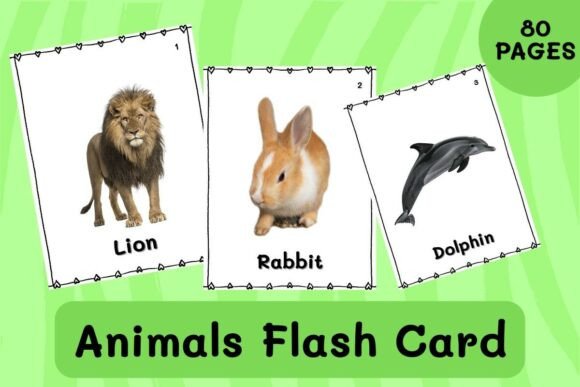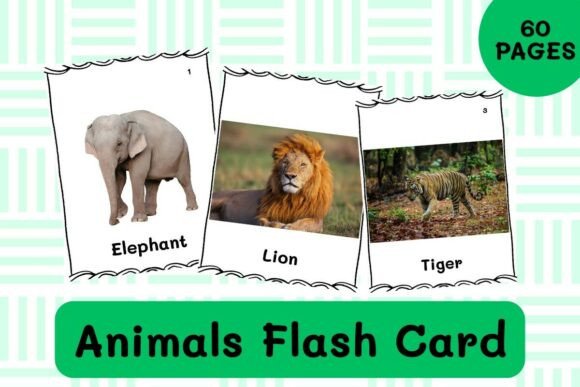
60 Animals Flash Card Printable No Prep
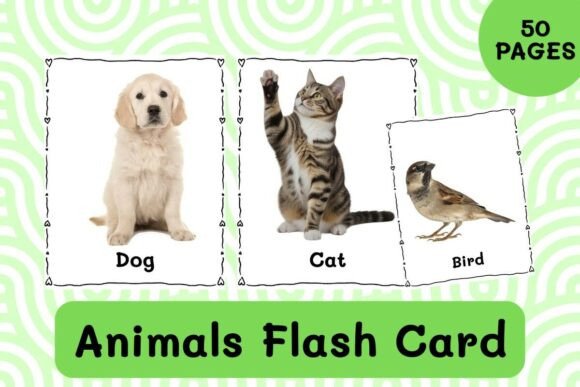
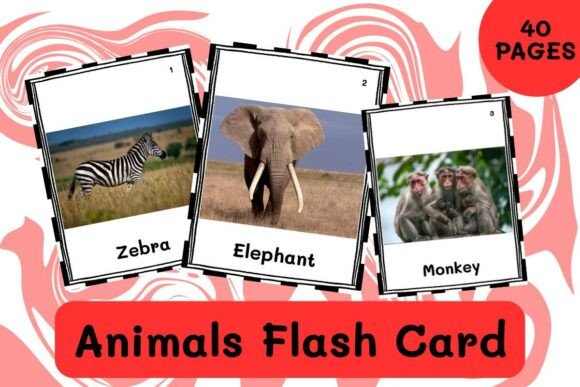
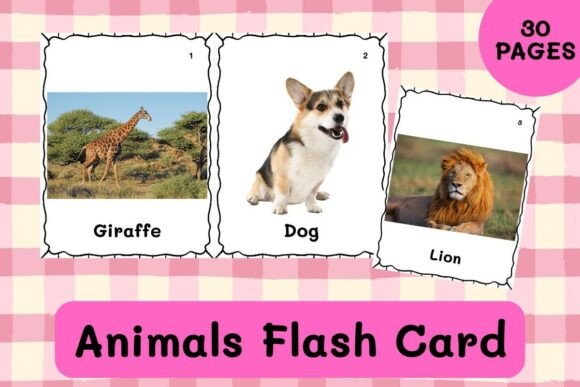
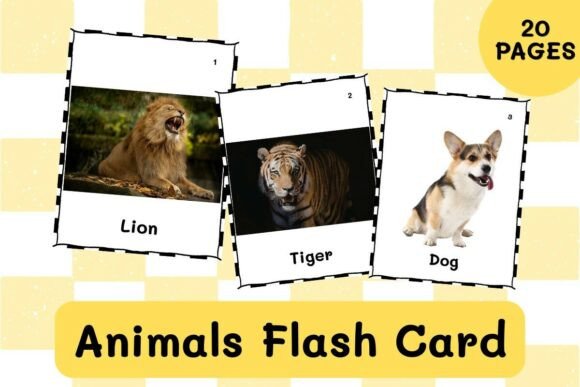
Learning doesn’t need to be complicated—especially when you’re building foundational vocabulary with young children. The 60 Animals Flash Card Printable No Prep delivers exactly what its name promises: a ready-to-use, thoughtfully curated set of 60 animal-themed flash cards designed for immediate impact in homes, classrooms, and learning studios. Each card features clear, high-resolution real photos—not clipart—supporting visual literacy, accurate animal recognition, and authentic language development. There’s no cutting, laminating, or lesson planning required. Just download, print on standard US Letter paper (8.5 x 11 inches), and start engaging.
What makes this resource stand out isn’t just convenience—it’s intentionality. Every animal was selected to reflect diversity in habitat, size, classification (mammals, birds, reptiles, insects, marine life), and phonetic patterns—making it equally valuable for early phonics practice, sound blending, and syllable awareness. A child sounding out “octopus,” “kangaroo,” or “chameleon” gains more than vocabulary; they build confidence in decoding unfamiliar words.
Creative Applications Beyond Flashcard Drills
This isn’t just a tool for rote memorization. Educators and caregivers are using the 60 Animals Flash Card Printable No Prep as a springboard for cross-curricular projects:
- Story Starters: Pull three random cards and challenge kids to invent a short narrative connecting them—e.g., “How did the fox, octopus, and flamingo meet at the coral reef?” This builds sequencing, inference, and expressive language.
- Habitat Mapping: Pair cards with world maps or printed biome posters. Sort animals by continent or ecosystem (rainforest, desert, tundra). Add simple labels or sticky notes for scientific terms like “nocturnal” or “camouflage.”
- Sensory Sorting Bins: Print two copies—one for visuals, one to cut into puzzle pieces (e.g., head + body). Hide pieces in rice or shredded paper for tactile discovery, then match to full cards.
- Phoneme Play: Use cards starting with the same sound (“tiger,” “turtle,” “tapir”) for alliteration games or initial sound scavenger hunts around the room.
Designers and content creators are adapting the set for digital extensions too: scanning individual cards to build interactive PDFs with clickable audio pronunciations, embedding them into Canva-based learning slides, or cropping images for custom sticker sheets or classroom reward charts.
Adapting for Different Learners and Goals
The strength of the 60 Animals Flash Card Printable No Prep lies in its flexibility across developmental stages and learning environments:
- For toddlers (2–4 years): Focus on naming, pointing, and matching—pair cards with stuffed animals or toy figures. Use repetition and rhythm: “Look—a gorilla! Big hands, big nose!”
- For preschoolers (4–6 years): Introduce categories (farm/wild/aquatic), compare features (“Which has feathers? Which has fur?”), or practice verbs (“The cheetah runs. The sloth climbs slowly.”)
- For ESL learners or speech therapy: Leverage real photos to reduce ambiguity. Use cards alongside sentence frames (“I see a ___.” “It lives in the ___.”) and encourage descriptive language (“The pufferfish is round and spiky.”)
- In inclusive classrooms: Print on colored cardstock for visual differentiation, add braille labels where appropriate, or pair with AAC devices using the same photo references for consistency.
Small business owners running childcare co-ops or homeschool collectives use these cards as part of subscription kits—adding activity guides, coloring pages, or QR codes linking to short animal fact videos. Bloggers embed printable previews in posts about “low-prep nature units” or “vocabulary-building without screens,” driving organic traffic through practical value—not hype.
Keeping It Effective, Organized, and Original
Consistency matters—but so does authenticity. To keep results clear and audience-friendly:
- Stay photo-forward: Avoid over-designing cards with borders or decorations that compete with the animal image. Real photos do the heavy lifting—let them breathe.
- Label intentionally: Use clean, sans-serif fonts at legible sizes. Include both common name (“jaguar”) and optional scientific context (“big cat, South America”) only where it supports the learner’s level—not as filler.
- Organize by use, not alphabet: Group cards by theme (e.g., “Animals That Fly,” “Animals With Stripes”) rather than A–Z for easier thematic teaching. Store them in labeled photo boxes or ring-bound sets by category.
- Iterate, don’t replicate: If you’re creating derivative materials—like a matching game or bingo sheet—redraw key visual cues from the original photos rather than reusing low-res screenshots. This maintains clarity and respects licensing intent.
Remember: the goal isn’t to make every activity “Pinterest-perfect.” It’s to create moments where curiosity sparks naturally—where a child points to the “axolotl” card and asks, “Why does it smile?” That question opens doors to biology, conservation, and wonder. The 60 Animals Flash Card Printable No Prep gives you the raw material. Your role—the educator, parent, designer, or creator—is to listen, respond, and extend the learning with grounded intention.
If you’ve used this set in an unexpected way—a pop-up zoo exhibit in a library, a bilingual story hour prop, or even a calming sensory tool for neurodivergent learners—we’d love to hear how. Sharing real applications helps others adapt thoughtfully, not just copy. And if this resource supported your work, consider leaving a 5-star review. It takes seconds—and directly supports thoughtful, no-fluff educational design like this.