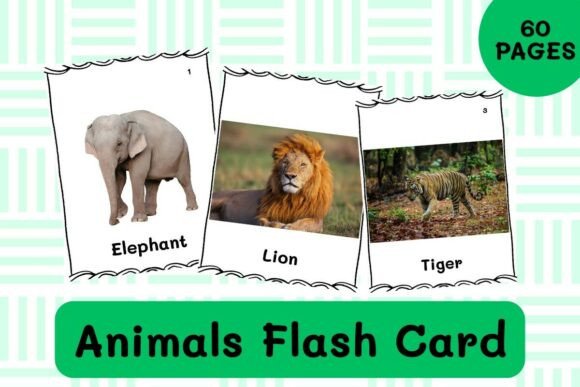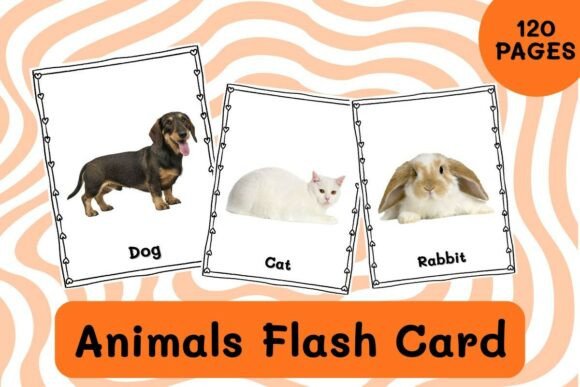
120 Animals Flash Cards Printable: Real Photos & No-Prep Learning for Early Vocabulary Development
Why Animal Flash Cards Are a Powerful Tool for Early Learning
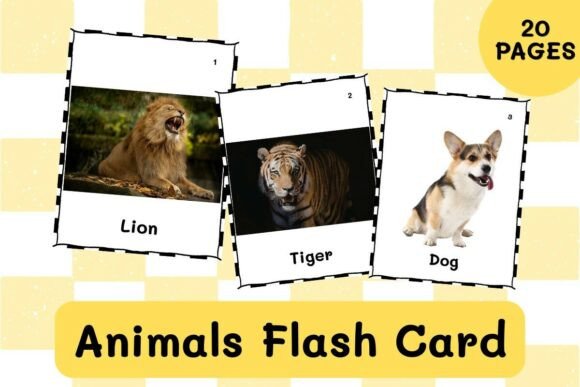
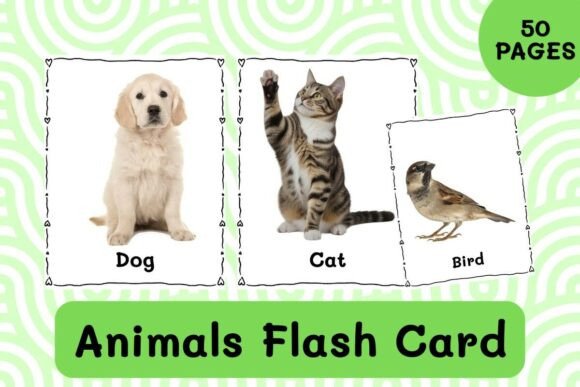
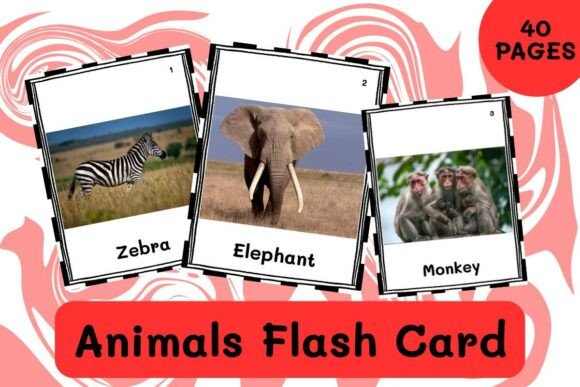
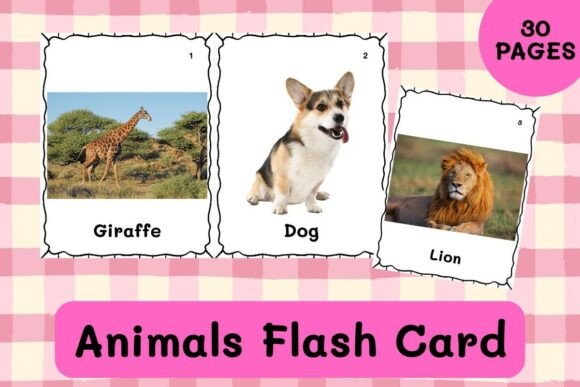
Introducing young children to the natural world begins with simple, concrete experiences — and 120 Animals Flash Card Printable sets deliver exactly that. Designed for preschoolers, kindergarteners, and early elementary learners, these high-quality, ready-to-print flash cards use real photos (not clipart or cartoons) to build authentic visual recognition, expand vocabulary, and strengthen foundational cognitive skills. Unlike generic picture cards, this collection features 120 distinct animals — from familiar pets like dogs and cats to fascinating wildlife such as pangolins, okapis, and snow leopards — offering rich exposure to biodiversity in an age-appropriate format.
What’s Included — And Why It Matters
You’ll receive a single, easy-to-download PDF file formatted for standard US Letter size (8.5 x 11 inches), optimized for home printers or school copiers. Each card displays one animal clearly centered on a clean white background — no distracting borders, text overlays, or decorative elements. This intentional minimalism supports focus, reduces visual overload, and aligns with evidence-based best practices for early childhood visual processing.
The set covers a wide range of animal categories:
- Mammals (e.g., red panda, narwhal, capybara)
- Birds (e.g., shoebill, toucan, flamingo)
- Reptiles & Amphibians (e.g., axolotl, Komodo dragon, poison dart frog)
- Marine Life (e.g., mantis shrimp, sea turtle, giant squid)
- Insects & Arachnids (e.g., leafcutter ant, velvet ant, jumping spider)
- Endangered & Rare Species (e.g., Javan rhinoceros, vaquita, saola)
This thoughtful curation does more than teach names — it sparks curiosity, invites questions about habitats and conservation, and lays groundwork for science literacy long before formal biology lessons begin.
No Prep, High Impact: How These Cards Fit Into Real Classrooms and Homes
“No prep” isn’t just marketing jargon — it reflects real time savings for educators and caregivers. With zero cutting, laminating, or sorting required (though laminating is recommended for durability), these cards are ready to use the moment you print them. Teachers integrate them into daily routines: morning circle time (“Today’s Animal Spotlight”), small-group phonics practice (e.g., identifying initial sounds: “Giraffe starts with /j/ — just like ‘jungle’!”), or memory-matching games that reinforce recall and attention.
At home, parents use them flexibly: during car rides, snack time, or wind-down moments before bed. A child might point to the “octopus” card and ask, “How many arms does it have?” — turning vocabulary building into shared discovery. Research consistently shows that repetition paired with meaningful interaction — not passive viewing — drives language acquisition. These cards provide the visual anchor; adults provide the responsive dialogue that makes learning stick.
More Than Naming: The Hidden Skills Built With Every Flip
While labeling animals seems straightforward, using these flash cards intentionally cultivates multiple developmental domains:
- Vocabulary Expansion: Children learn precise terms (“chinchilla,” “quokka,” “aardvark”) rather than vague labels (“fuzzy animal,” “big bird”). Precise vocabulary correlates strongly with later reading comprehension and academic success.
- Phonemic Awareness: Sorting cards by beginning sound (“Which animals start with /b/? Bat, bison, blue whale”) builds critical pre-reading skills.
- Working Memory & Attention: Matching games, sequencing by size or habitat, or recalling “What came after the meerkat?” all exercise executive function.
- Categorization & Critical Thinking: Grouping animals by traits (“Who lives in water? Who has fur? Who lays eggs?”) introduces early scientific reasoning.
- Emotional & Social Development: Discussing animal behaviors (“Why do wolves howl? How do elephants comfort each other?”) nurtures empathy and perspective-taking.
Real Photos vs. Illustrations: Why Authenticity Makes a Difference
A common misconception is that cartoon-style illustrations are “more engaging” for young children. In fact, studies in developmental psychology suggest that real photographs support stronger generalization — meaning children are more likely to recognize a real squirrel in a park after seeing its photo on a flash card than after seeing a stylized drawing. Real images preserve accurate proportions, textures, colors, and contextual cues (e.g., feathers, scales, fur patterns), helping children form robust mental models. They also lay the foundation for media literacy by distinguishing between representation and reality — an increasingly vital skill in our digital world.
Practical Tips for Getting the Most From Your 120-Card Set
Maximize learning without extra effort using these educator-tested strategies:
- Start Small: Introduce only 5–8 cards per session. Overloading causes cognitive fatigue — especially for toddlers or neurodiverse learners.
- Add Movement: Pair cards with actions (“Flap like a flamingo,” “Slither like a snake”) to engage kinesthetic memory.
- Connect to Life: Visit a local zoo, watch short documentaries (like BBC’s Life Story clips), or read nonfiction picture books featuring the same animals.
- Invite Prediction: Before revealing a card, say, “This animal lives in cold places, has thick fur, and swims well. What could it be?” Encourages inference and deductive reasoning.
- Rotate Regularly: Swap out 2–3 cards weekly to maintain novelty while reinforcing previously learned ones through spaced repetition.
Are these suitable for children with speech delays or autism?
Yes. Many speech-language pathologists and special educators use real-photo flash cards as part of AAC (Augmentative and Alternative Communication) supports. The clarity, consistency, and lack of visual clutter make them highly accessible. Always pair cards with verbal modeling and wait time — never pressure for immediate verbal output.
Can I use these digitally?
While designed for printing, you may display individual cards via tablet or interactive whiteboard for whole-group instruction. However, tactile handling — flipping, sorting, holding — enhances multisensory learning. For screen-based use, consider pairing with short, vetted video clips (e.g., National Geographic Kids) to deepen understanding.
Is there a companion activity guide?
This printable set focuses on flexibility and open-ended use — no rigid lesson plans required. That said, many buyers create their own extension activities: coloring pages, habitat dioramas, or simple research journals (“What does a sloth eat? Where does it live?”). The simplicity of the design invites creativity, not dependency on scripted materials.
Supporting Lifelong Learners — One Card at a Time
In an era of rapid information and fleeting attention spans, tools that foster deep looking, patient questioning, and joyful connection remain profoundly valuable. These 120 Animals Flash Card Printable resources do more than teach names — they nurture observation, respect for living things, and the quiet confidence that comes from knowing and naming the world. Whether used by a homeschool parent in rural Montana, a Head Start teacher in Chicago, or a bilingual educator in Miami, they meet children where they are — curious, capable, and eager to understand.
If you found this resource helpful, consider leaving a 5-star review — your feedback directly supports independent creators who prioritize educational integrity over trends. And don’t forget to follow the store for updates, seasonal bundles (think: “Ocean Animals + Habitat Sorting Mats”), and occasional freebies designed with the same care and pedagogical intention.