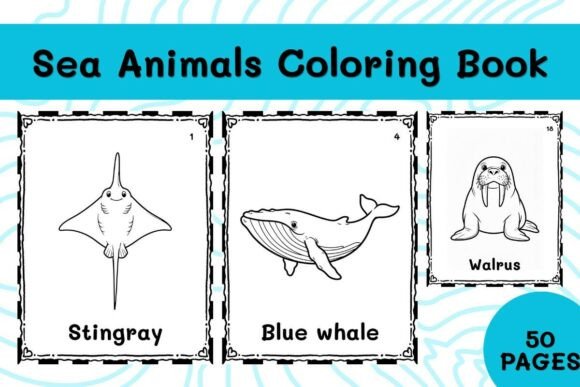
50 Sea Animals Coloring Book Printable
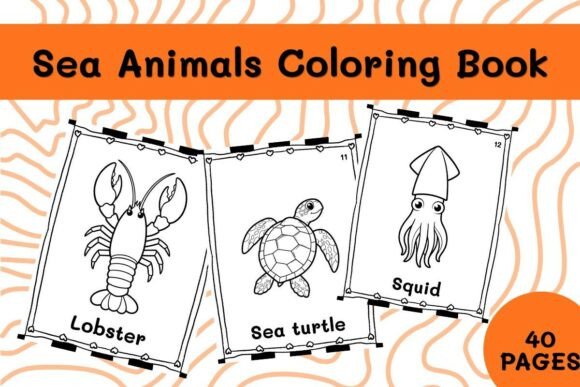
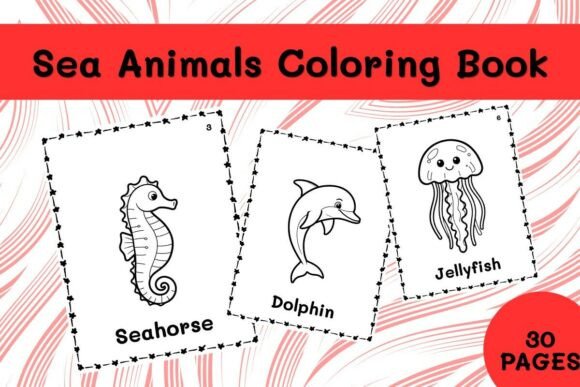
Imagine a resource that turns quiet coloring time into a meaningful learning experience—without lesson planning, laminating, or cutting. That’s exactly what the 50 Sea Animals Coloring Book Printable delivers: fifty ready-to-use, high-quality coloring pages featuring sea creatures like octopuses, seahorses, jellyfish, manatees, and coral reef fish—all paired with clear, age-appropriate vocabulary words.
More Than Just Coloring Pages
This isn’t just a collection of ocean-themed outlines. Each page is intentionally designed to support language development. The sea animal image sits alongside its name in bold, easy-to-read type—often with phonetic cues or simple definitions for early readers. Some pages include related terms (like “tentacle,” “camouflage,” or “habitat”) to gently stretch vocabulary without overwhelming learners.
Because it’s built around real-world marine life, the coloring book bridges science and literacy. A child coloring a narwhal might notice its tusk, then read the word “tusk” aloud. An ESL student practicing “dolphin” reinforces pronunciation, spelling, and visual association—all in one focused, low-pressure activity.
Who Benefits—and How?
Educators use this printable across settings: as a calm-down station during literacy rotations, a vocabulary warm-up before a marine science unit, or an inclusive option for students who need movement breaks but still benefit from academic engagement. In bilingual or ESL classrooms, the visuals serve as powerful anchors for new English terms—especially when paired with quick oral practice (“Point to the stingray. Say ‘stingray.’ What sound does it start with?”).
Homeschool families appreciate how seamlessly it fits into themed weeks—like “Ocean Week” or “Animal Adaptations.” No prep means no friction: print a few pages, grab crayons, and dive in. Freelance tutors and speech-language pathologists integrate select pages into sessions targeting articulation (e.g., practicing the /j/ sound in “jellyfish”) or semantic mapping (grouping animals by habitat, diet, or body covering).
Even adults find value. Therapists use ocean-themed coloring for mindfulness and grounding exercises; small business owners repurpose clean line art for educational social media posts or classroom posters (always respecting license terms); and content creators reference the accurate, kid-friendly illustrations when designing ocean-related worksheets or blog graphics.
Why “No Prep” Makes a Real Difference
“No prep” here means truly ready-to-go: each PDF page is sized at 8.5 x 11 inches, optimized for standard printers, and formatted with generous margins and crisp black-and-white line art. There are no overlays, watermarks, or hidden layers—just clean, classroom-tested designs. You won’t waste time resizing, converting files, or troubleshooting fonts.
That simplicity saves energy—especially for busy educators juggling multiple grade levels or parents managing remote learning alongside work. It also lowers the barrier for consistent use: if you only have five minutes between meetings or after dinner, pulling up one page and printing it takes less time than deciding what to do.
Practical Uses Across Contexts
- Classroom centers: Place 3–4 pages in a literacy bin with colored pencils and a simple recording sheet (“I learned: ______”). Rotate weekly to keep interest fresh.
- ESL support: Pair pages with flashcards or short audio clips. Ask learners to color while listening, then name three animals they remember.
- Homeschool routines: Use one page per day as part of a morning basket—combine with a short video about ocean zones or a read-aloud like The Magic School Bus on the Ocean Floor.
- Digital integration: Upload individual pages to learning platforms like Seesaw or Google Classroom (as PDFs), and ask students to type one sentence about their favorite sea animal using the target vocabulary.
- Creative side projects: Cut out finished coloring sheets to make ocean-themed greeting cards, bulletin board displays, or even simple stop-motion animation backdrops.
Things to Keep in Mind
This resource shines when used intentionally—not as filler, but as part of a broader language or science goal. If your aim is deep scientific understanding, pair it with nonfiction texts or hands-on models. For advanced spellers, consider adding a challenge like writing synonyms (“What’s another word for ‘giant’ when describing a whale?”) or drawing a labeled diagram on the back.
Also note: while the line art is clear and friendly, it’s not overly simplified—some creatures (like a detailed anglerfish or a branching coral) offer gentle complexity that supports fine motor growth. That makes it equally suitable for late kindergarten through early middle school, depending on the learner’s needs.
If you’re comparing options, check whether the file includes answer keys or teaching notes. This set doesn’t—it relies on the power of visual reinforcement and open-ended exploration. That’s intentional: it gives you flexibility to adapt each page to your audience’s pace, interests, and goals.
A Thoughtful Tool for Real Learning
The 50 Sea Animals Coloring Book Printable works because it respects both the learner and the educator’s time. It doesn’t try to replace instruction—it enhances it. It doesn’t assume prior knowledge, yet it grows with the user. And it reminds us that learning doesn’t always need screens, apps, or elaborate setups. Sometimes, it starts with a crayon, a quiet moment, and the quiet wonder of a sea turtle gliding across the page.
If you’ve used this coloring book in your classroom, homeschool, or therapy practice—and found it helped build confidence with new words—we’d love to hear how. A quick 5-star review helps creators continue offering thoughtful, classroom-ready resources like this one. And if you’d like updates on new ocean-themed or vocabulary-focused printables, following the store is the easiest way to stay in the loop.