30 Animals Coloring Book Printable
Learning new words doesn’t have to mean flashcards and repetition. With the 30 Animals Coloring Book Printable, vocabulary building becomes a relaxed, hands-on experience—especially for young learners, ESL students, or anyone who learns best through visual and tactile engagement. This isn’t just a set of coloring sheets. It’s a thoughtfully designed educational tool that pairs clear animal illustrations with carefully selected vocabulary terms—each page reinforcing spelling, word recognition, and meaning in an intuitive way.
What Makes This Coloring Book Different?
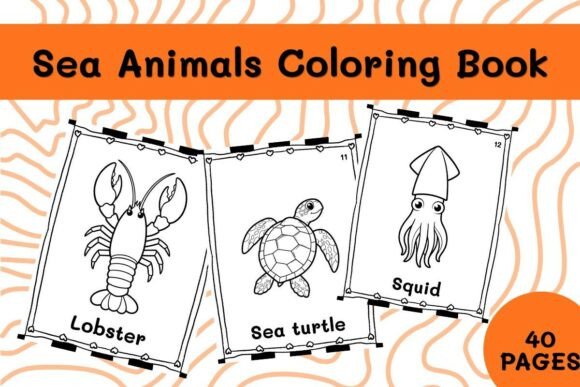
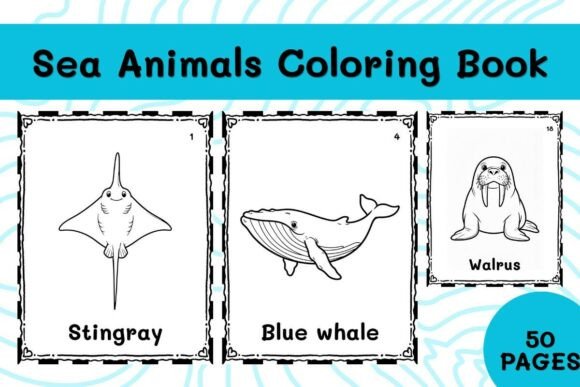
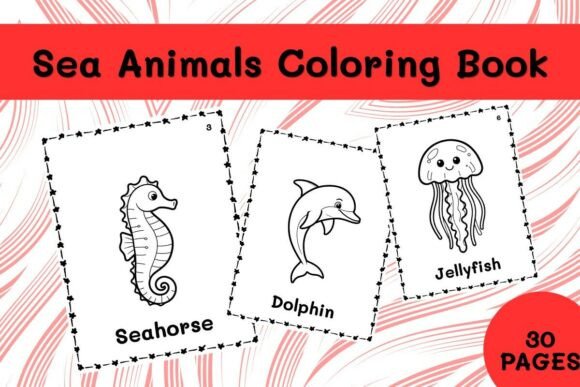
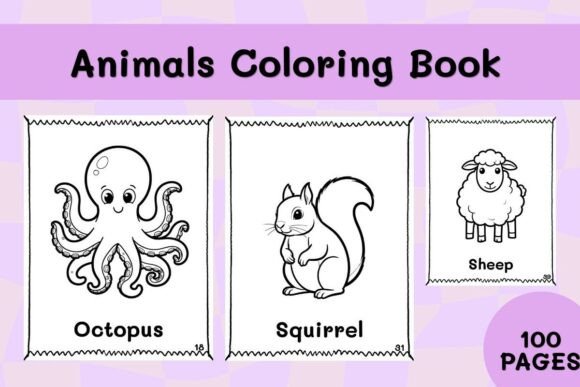
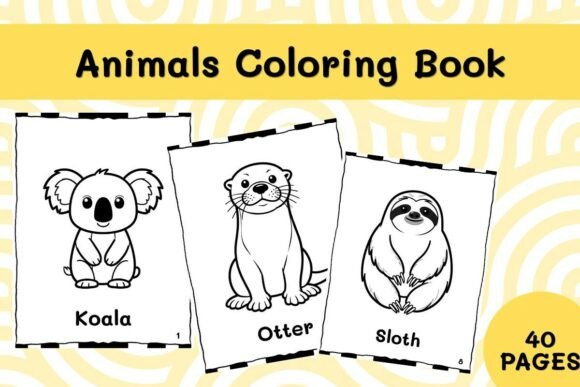
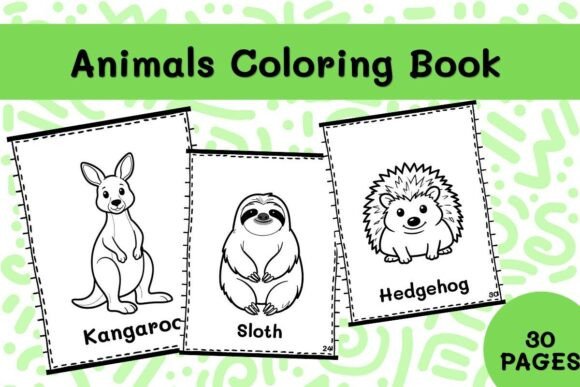
Unlike generic coloring pages, this Animals Coloring Book – Learn Vocabulary set is built around language development. Every one of the 30 pages features a realistic yet child-friendly animal drawing—think fox, octopus, kangaroo, or flamingo—alongside its name in large, easy-to-read print. Some versions also include simple phonetic cues or part-of-speech labels (e.g., “noun”) to gently scaffold learning without overwhelming beginners.
The PDF is formatted at standard 8.5 x 11 inches, making it compatible with most home printers and classroom copiers. There’s no cutting, laminating, or assembling—just download, print, and go. That “no prep” promise holds up: whether you’re a busy teacher preparing for tomorrow’s literacy center, a homeschool parent juggling multiple subjects, or an ESL tutor supporting beginner speakers, this resource fits seamlessly into your existing routine.
Who Benefits—and How?
Educators often tell us they use the 30 Animals Coloring Book Printable in several flexible ways:
- In small-group instruction: Students color while naming each animal aloud, practicing pronunciation and articulation together.
- As independent seatwork: Early finishers or quiet-time learners stay engaged while reinforcing spelling patterns (e.g., “-oo” in “moose,” “-nk” in “monkey”).
- During thematic units: Pair pages with science lessons on habitats, diets, or adaptations—coloring the “polar bear” while discussing Arctic ecosystems adds depth and retention.
- In speech therapy sessions: SLPs use the pages to target specific sounds (like /r/ in “rhinoceros” or /j/ in “jaguar”) during structured coloring tasks.
Parents and caregivers find it especially helpful for bilingual households or children developing English alongside another language. Because the images are uncluttered and the text is bold and legible, kids can make strong visual-word connections—even before they’re reading fluently. One homeschooler shared how her 6-year-old began pointing to animals in books and saying their names confidently after using just five pages over two weeks.
Why Vocabulary + Coloring Works So Well
Research shows that combining motor activity (coloring) with language input strengthens neural pathways for memory and recall. When a child carefully shades the stripes on a tiger while saying “tiger” and tracing the letters, they’re engaging multiple senses at once—visual, kinesthetic, and auditory. That multisensory reinforcement helps new vocabulary stick far better than passive worksheets or rote memorization.
This approach also lowers anxiety around learning. For ESL learners who may feel self-conscious speaking aloud, coloring offers a low-pressure entry point. They can whisper the word, sound it out slowly, or even write it again in the margin—all without performance pressure. And because animals are universally familiar and fascinating, motivation stays high across age groups and skill levels.
Realistic Uses Beyond the Classroom
You don’t need a lesson plan to get value from this resource. Freelance educators use individual pages as warm-up activities in online tutoring sessions—students color while the tutor shares screen and discusses characteristics. Bloggers and content creators adapt the clean line art for social media posts (with proper attribution), pairing each animal image with fun facts or pronunciation tips. Small business owners who run after-school enrichment programs include select pages in welcome packets for new families—giving kids something calming and purposeful to do while parents complete paperwork.
Even adults enjoy these pages—not as vocabulary builders, but as mindful breaks. Several users report printing a few copies for themselves and coloring alongside their children, turning learning time into shared, screen-free connection.
Things to Keep in Mind Before You Start
While the 30 Animals Coloring Book Printable is intentionally simple, a few practical notes help maximize its impact:
- It’s not a full curriculum. Think of it as a high-leverage supplement—not a replacement for guided reading, conversation practice, or grammar instruction.
- Animal selection leans toward common and globally recognizable species. You’ll find lion, dolphin, and owl—but not obscure or region-specific animals like pangolin or okapi. That intentional choice supports broader accessibility and familiarity.
- No digital interactivity is included. This is a printable-only resource—ideal for offline use, but not designed for tablets or stylus-based coloring apps.
- Fonts and layout prioritize clarity over decoration. There are no distracting borders or background patterns, so focus stays on the animal and its name—a deliberate design decision for emerging readers.
If you're evaluating similar resources, compare how many unique vocabulary terms are included, whether spelling aligns with your region’s conventions (e.g., “gray” vs. “grey”), and whether the line art is thick enough for younger children to color comfortably without going outside the lines.
A Small Resource With Real Impact
What stands out about this Animals Coloring Book – Learn Vocabulary set isn’t flashy design—it’s thoughtful intention. Each page serves a dual purpose: creative expression and cognitive reinforcement. It respects learners’ time, energy, and attention spans by removing friction (no prep!) while adding meaningful structure (targeted vocabulary, consistent formatting, pedagogically sound layout).
Whether you're guiding a class of 25 second graders, supporting a child with delayed language development, or designing inclusive materials for a community learning hub, the 30 Animals Coloring Book Printable delivers quiet, consistent value. It reminds us that foundational skills—spelling, word recognition, confidence with English—can grow naturally when paired with curiosity, color, and calm.